
Beyond the Story: Communication, Leadership & Finding Your Voice
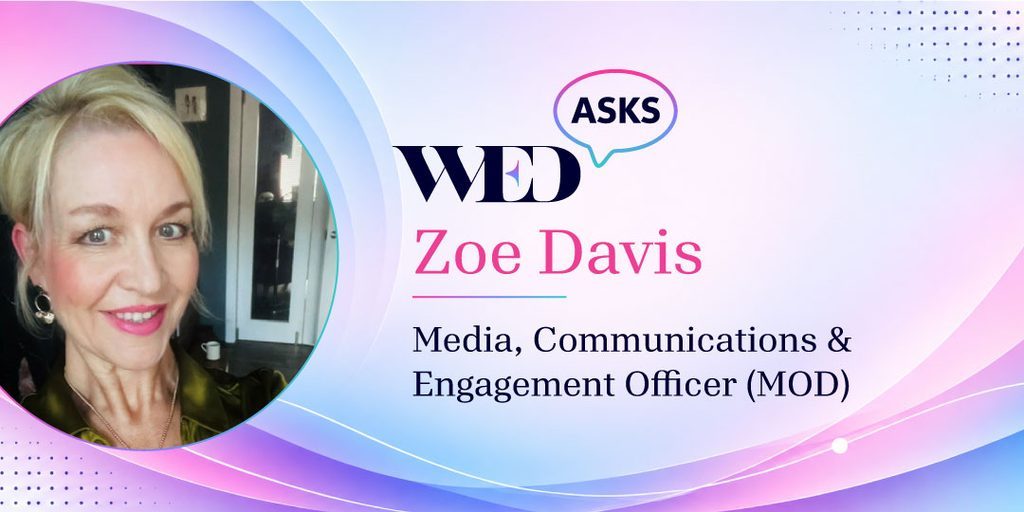
For those who don’t know you, who is Zoe Davis when you take away the MoD role, the media communications title, the career and everything people see on LinkedIn?
A Wimbledon worshipper (watcher, definitely not player), live-comedy addict, and Body Combat enthusiast who firmly believes every problem can be solved with a roundhouse kick and the right playlist. A lifelong lover of rap and hip-hop (my ringtone usually gives that away before I do), proud wife, devoted mum, and undeniably the coolest aunt in the family. A loyal friend, enthusiastic social butterfly, and someone who gains energy from great company, good conversation, and plenty of laughter.

You’ve built a career around media communications and engagement within Defence. What first attracted you to communications, and what has kept you passionate about it?
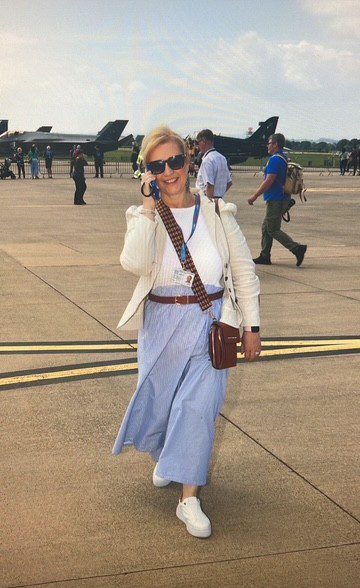
I’ve always been a people-focused person, and throughout my 27 years in the Civil Service, building relationships and communicating effectively have been at the heart of every role I’ve undertaken. I’m genuinely passionate about communications and the role it plays in connecting people, building trust and delivering positive outcomes. From acting as the link between the RAF and commercial contractors as a Contract Management Officer, to my current role as Engagement Lead at RAF Leeming, I’ve worked with a wide range of stakeholders and partners. I’m often the first point of contact for high-profile visits, events and community engagement activities, and I enjoy bringing people together, fostering strong relationships and ensuring the right messages reach the right audiences.
Defence has an extraordinary number of stories to tell, but not every story can, or should, be told in the same way. What have you learned about finding the story within a story?
What I’ve learned is that the real story is often not the activity itself, but the people behind it. In Defence, we work in an extraordinary environment with individuals operating in challenging and sometimes austere conditions, yet many of them see it as simply doing their job. Because of that, I’ve learned to look beyond the headline and focus on the human-interest angle.
The best stories come from understanding the ‘why’ behind what people do, their motivation, the impact they have, and the challenges they’ve overcome. By telling those personal stories, we make Defence activity relatable, engaging and meaningful to our audiences. In my experience, when you find the human story within the operational story, that’s when communications have the greatest impact.
What makes someone a really good Defence communicator? Is it the ability to write, the ability to understand your audience, the confidence to challenge the brief, or something else entirely?
For me, it’s all of those things. However, underpinning all of that is knowledge and understanding of the subject matter. Research is critical. You can’t effectively communicate a message if you don’t fully understand what you’re trying to communicate or why it matters. I’ve learned that the more time you invest in understanding the subject, the more authentic and impactful your communications will be. It’s also taken me time to develop confidence in my own ability as a communicator. Early in my career, I focused on getting the facts right; now I’m equally focused on ensuring the true meaning and intent come across to the audience. For me, great communication is about turning sometimes complex information into messages that people can understand, relate to and act upon.”
You work in an environment where communication can have real operational, reputational and human consequences. How do you balance telling a compelling story with getting the facts, context and responsibility right?
I think the key is getting the facts right first. Working in Defence, I’m very conscious that accuracy and transparency are incredibly important, although transparency has to be balanced with operational security and privacy considerations. We have robust processes in place for a reason, and I’d always make sure information is properly checked and verified before it’s shared.
Once I’ve got that foundation, I focus on making the story relevant and understandable for the audience. One thing I’ve learned is that it’s very easy to bamboozle people with acronyms and RAF jargon, but if people don’t understand what you’re saying, the story gets lost. My job is to translate often complex or technical information into something clear, engaging and meaningful without losing the context or accuracy
Has working in Defence changed the way you communicate outside of work? Do you ever find yourself automatically looking for the message, the audience or the story?
It definitely depends on the environment I’m in. I’m not sat in the pub on a Friday night applying Defence communications principles to every conversation! But I do think working in communications has made me naturally more aware of audiences, messages and how things might be perceived. Even outside work, I often find myself thinking about how something could be communicated more effectively. If I’m at an event, I’ll naturally look for the story behind what’s happening, and I’ve even been known to offer a bit of informal PR advice while getting my nails done when someone is talking about promoting their business on social media. I think once you’ve worked in communications for long enough, you can’t help but see the world through that lens.
Do organisations sometimes confuse communication with simply putting more information out there? Is the real challenge sometimes knowing what not to say?
I think a lot of organisations are guilty of producing content because they feel they have to, rather than thinking about how to engage their audience. Personally, I really appreciate communications where you can see creativity has gone into the approach, particularly when the subject matter is quite dry. Some of the most effective communications I’ve seen have taken complex or seemingly uninteresting topics and made them relevant and engaging.
Defence communications can involve communicating with people who have completely different levels of knowledge, experience and interest. How do you make something complex feel accessible without oversimplifying it?
I think Defence communications is quite unique because we’re often communicating with audiences that have very different levels of knowledge, experience and interest. We might be talking about our amazing personnel, our equipment and capabilities, recruitment opportunities, operational activity or humanitarian work, and each of those audiences is looking for something different.
For me, it starts with being clear about the purpose of the communication. Are we trying to inspire potential recruits? Demonstrate capability? Reassure the public? Highlight the work our people are doing? Once you understand the objective, you can tailor the message accordingly. The key is to make information accessible without watering it down. It’s very easy in Defence to fall back on acronyms and military jargon, but if the audience doesn’t understand what you’re saying, you’ve lost them. You don’t need to oversimplify the message; you just need to explain it in plain English and focus on what matters to that audience. Ultimately, good communication is about delivering the right message, to the right audience, at the right time.
How important is authenticity in Defence communications? Can people tell when something has been written by an organisation rather than by an actual human being?
Authenticity is vital in Defence communications. As a government department, we have a responsibility to be accurate, honest and transparent wherever possible, and I think audiences are very quick to recognise when something feels overly corporate or scripted. People connect with people, not organisations.
One of the key priorities set by Defence senior leaders is our people, and rightly so. Our personnel are often the best people to tell the story of what we do and why we do it. Whether it’s an aviator, engineer, chef, medic or someone supporting operations behind the scenes, their experiences bring credibility and authenticity that no corporate message can replicate.
We’re also incredibly fortunate in Defence because we have an amazing story to tell and a wealth of history and heritage to celebrate. From current operations and humanitarian support to innovation, capability and the outstanding work of our people, there is no shortage of compelling stories.
You’ve spent much of your career helping other people tell their stories. Who taught you how to tell your own?
I’ve been lucky enough to work with and learn from some really inspiring people throughout my career, and I think I’ve taken something from all of them. Different managers, colleagues and mentors have all influenced the way I communicate, the way I build relationships, and the confidence I have in my own abilities.
If I’m honest, though, I think learning to tell my own story has been a natural evolution. As my career has progressed, so has my confidence. I’ve reached a point where I know I’ve earned my place at the table and that my experience and perspective have value.
Even when I was asked to contribute to this, my first thought was, “Why would they want to hear from me?” But then I reminded myself that I bring nearly three decades of Civil Service experience, a genuine passion for communications, and a unique perspective. I am worthy of being heard and I’m the most qualified person to tell my own story.
We often talk about charismatic leadership and leaders who command attention. But is the ability to listen, ask better questions and create space for others actually more important?
I believe the best leaders are the ones who make themselves accessible, not those who feel out of reach. Charisma and presence have their place, but I’ve always valued leaders who listen, ask thoughtful questions and genuinely want to hear different perspectives. Working alongside the military, I’ve often reflected on whether people at every level of an organisation feel able to have their say and whether those views are reaching the people who need to hear them. A great example of this was when I had the privilege of serving on the RAF Shadow Board. The board brought together military and civilian personnel from different backgrounds, branches, ranks and grades to provide honest feedback and challenge senior leaders on strategic issues affecting the Service. What struck me most was that it demonstrated leaders actively creating space for others to contribute. It wasn’t about senior leaders having all the answers; it was about listening to the lived experiences of people across the organisation and using those insights to make better decisions.
You’ve been involved with WED and have seen first-hand how powerful it can be when people from different parts of the Defence enterprise come together. What do you think happens when we create spaces where people can take off the organisational “hat” and simply be themselves?
Some of the most amazing aspects of WED are the sense of belonging, the camaraderie, and the exchange of knowledge and experiences. Listening to people share their stories, what inspires them, and what drives them is priceless. It helps you realise that, regardless of rank, role, service or organisation, many of us face similar challenges and are motivated by the same desire to make a positive difference. Personally, WED makes me feel valued, respected and recognised for the contribution I bring. It is a place where people are encouraged to be authentic, and that creates an environment where everyone can learn from one another. I’ve often described it as being part of the best club, not because it’s exclusive, but because it’s genuinely inclusive. I’ve recommended WED to many colleagues and actively champion it because I’ve seen first-hand the impact it has. Bringing together people from across Defence, industry and other services creates opportunities to build relationships, share ideas and learn from different perspectives. When people feel comfortable enough to be themselves, that’s when the real conversations happen, and that’s when we see the very best of Defence: passionate people coming together around a common goal and championing what makes our Defence community so special. I feel incredibly fortunate to be part of Women Empowering Defence. The chance to engage with such accomplished and inspirational women from across Defence and its partner industries is both energising and motivating. Being part of a community where women genuinely cheer each other on, share experiences and lift one another up is something I am deeply grateful for.
What makes someone feel genuinely seen at work? And how much of that comes down to leadership rather than formal policy?
For me, feeling genuinely seen at work comes down to feeling valued, listened to, and trusted. It’s knowing that your ideas are heard and considered, even if they’re not always the ones that are taken forward. Having the opportunity to contribute and knowing that your perspective matters makes a huge difference to how engaged and motivated you feel. Whilst policies can help create the right environment, I believe leadership plays the biggest role. The best leaders are those who genuinely believe that every voice has value, regardless of rank, grade, or position. They create a culture where people feel comfortable sharing ideas, challenging constructively, and contributing to the bigger picture.
Communications often sits at the intersection of people who want different things, leaders, subject-matter experts, operational teams, media and the public. How do you influence people when you don’t actually have authority over them?
For me, influence comes from credibility, confidence, and trust rather than authority. It’s about knowing your subject, doing the research, understanding the wider context, and being prepared to take accountability for the advice you give. In Defence communications, we’re often in the position of advising senior leaders on how best to respond or communicate, despite not being the decision-maker. To do that effectively, you need the confidence to challenge constructively, back up your recommendations with evidence, and explain the potential impact of different approaches. Working at station level, I have to balance telling a compelling local story while ensuring it aligns with Defence’s wider strategic messaging. The key is bringing those two perspectives together in a way that feels authentic, interesting, and human. If people can see that you understand their priorities, respect their expertise, and are helping them achieve a shared objective, they’re much more likely to come with you, even when you don’t have formal authority over them.
Do you think Defence sometimes spends too much time communicating what it wants people to hear and not enough time listening to what people are actually saying back?
From my experience, Defence generally gets that balance right. We are a unique organisation, quite unlike any other government department. We have highly capable equipment, exceptionally trained personnel, and a responsibility to defend the nation. That inevitably means there are times when we have to be careful about what we communicate and how we communicate it.
That said, listening is just as important as speaking. Insight, evaluation, and audience feedback are critical to effective communications. It’s not enough to put information out there; we need to understand how people are responding to it, what concerns they have, and whether our messages are landing in the way we intended.
Public trust and confidence are incredibly important to Defence. We rely on the support of the public, and that support is built through transparency where we can be transparent, honesty, and a genuine willingness to listen. People need to feel informed, reassured, and safe, and the only way to achieve that is by maintaining a two-way conversation rather than simply broadcasting messages.
What leadership lesson have you learned the hard way? Something that experience taught you that no communications course or leadership framework could have prepared you for.
For me, the toughest leadership lesson I’ve learned is that not every decision will go the way you want it to, and sometimes decisions are made for the benefit of the bigger picture rather than the individual. Early in my career, I found it difficult not to take those decisions personally, particularly when I felt strongly about a particular outcome.
What experience has taught me is the importance of being measured rather than reactive. I’m a firm believer that once something is said out loud, you can’t take it back, so I’ve learned to take a step back, consider all perspectives, and understand the wider context before responding. Leadership isn’t about always getting your own way or agreeing with every decision; it’s about being professional enough to accept differing views, support the collective direction, and move forward positively, even when you would have chosen a different path.
What’s something you’ve changed your mind about during your career, perhaps about communication, leadership, Defence, people or yourself, that you now see very differently?
Something I’ve changed my mind about during my career is the idea that pride in Defence is something that comes naturally because of the organisation itself. I’ve always been incredibly proud to work for Defence and, admittedly, I’m probably a little biased when it comes to the RAF. But what has really changed my perspective is seeing that pride through the eyes of our people.
Through hosting visits, talking to personnel across the Station, and helping tell their stories, I’ve seen first-hand the enthusiasm, passion and commitment that people bring to their roles. Whether they are engineers, support staff, aviators or civil servants, everyone has a part to play and genuine pride in their contribution to the wider mission.
I feel incredibly privileged in my role because I spend much of my time focusing on the positive and telling the story of the RAF as a force for good. What I’ve come to realise is that the pride and authenticity behind those stories are real. It doesn’t matter whether our people are speaking to veterans, schoolchildren, aircraft enthusiasts or local community groups, they consistently give their best and are passionate about what they do.
And finally, WED Asks, when you look back at your career, what do you hope people remember about Zoe, not the campaigns, communications or stories you helped deliver, but the way you made people feel, the confidence you gave them and the voices you helped bring into the room?

When I look back at my career, I hope people remember that I showed up, got stuck in and always gave my best. I hope they remember someone who was willing to challenge herself, who never stopped learning, and who was always striving to be better and do better.
I’m incredibly proud to be a civil servant and to support Defence. Whatever role I’ve been in, I’ve tried to represent the organisation with passion, professionalism and, importantly, a smile.
Working in communications has often meant standing behind the lens rather than in front of it, helping other people tell their stories. If there’s one thing I’d like people to remember, it’s that I helped give them the confidence to share their voice and made them feel that their story mattered. I’ve always focused on understanding the audience and finding the best way to make a story powerful, meaningful and inspiring.
More than any campaign, article or event, I hope people remember that I was approachable, supportive and genuinely interested in helping others succeed. If I’ve helped someone feel valued, given them the confidence to step forward, or ensured their voice was heard in the room, then I’d consider that one of the most meaningful achievements of my career.


Responses