
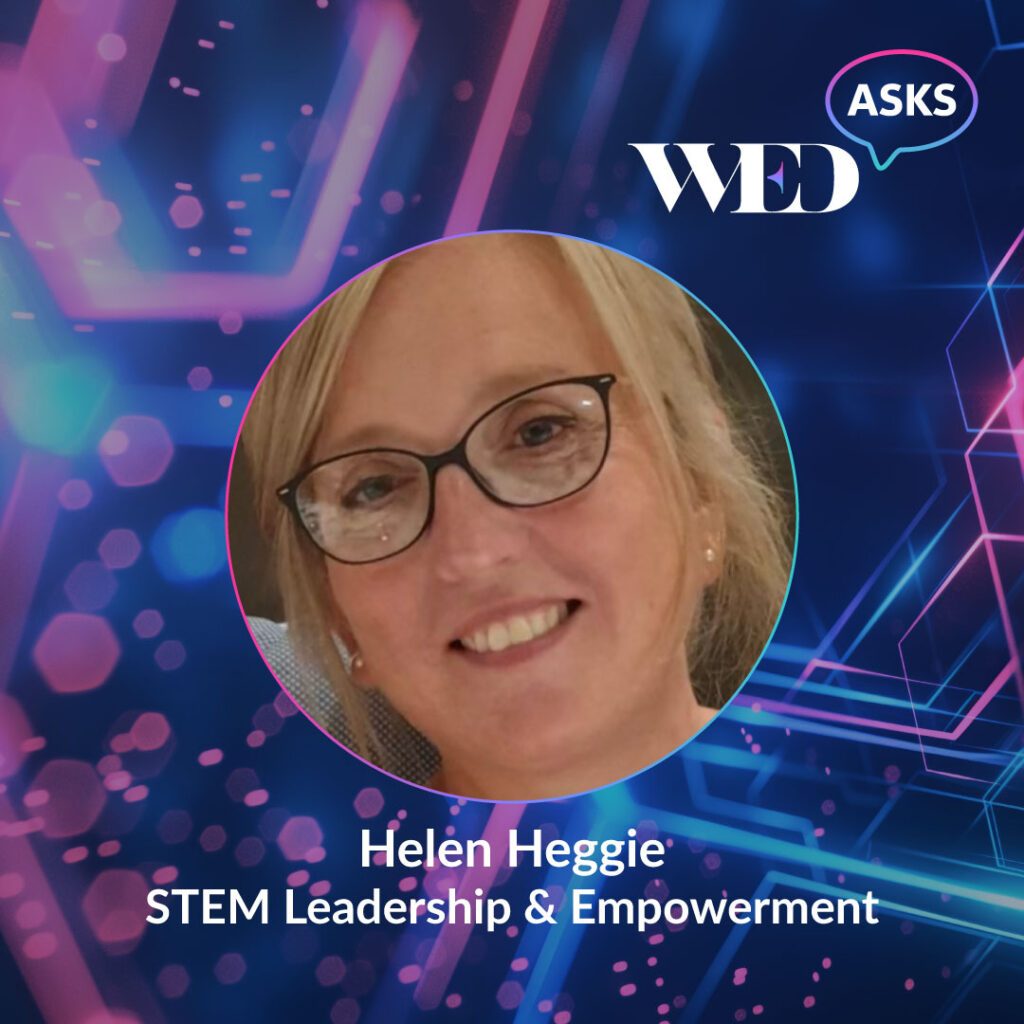
STEM Leadership & Empowerment
Can you share a little about your journey into STEM and how you came to lead STEMFIRST?
I have always been passionate about STEM. Addicted to puzzles from a very early age, my mother often comments that she always knew I would be an Engineer.
After studying Mechanical Engineering degree at Cambridge University, I become an Advanced Technology Programme Engineer for Ford Motor Company, and gained Chartered Engineer status with the IMechE.
Over time, I realised my real drive was inspiring others about engineering, so I completed a PGCE and founded STEMFirst in 2011 to bring STEM opportunities to a wider and more diverse audience.
I’ve now spent more than 30 years promoting engineering and helping young people build skills and see how vital STEM is to society. STEMFirst’s mission is to inspire young people—and those who influence them—about Science, Technology, Engineering and Maths. As a consultancy, we support a wide range of partners with STEM outreach and educational engagement.
Since 2011, we’ve delivered the Government funded STEM Ambassador Programme across the North West, recruiting, training and deploying 5,500 volunteers. Our region is recognised as one of the strongest STEM Ambassador networks in the UK. We work across both private and public sectors, including major employers, professional institutions, educators and government. Our team of nine delivers programmes for partners such as SP Electricity North West, the RAF, STEM Learning, ESERO, BAE Systems and DSIT/Innovate UK.

What does leadership in STEM look like to you, and has your perspective changed over your career?
To me, leadership in STEM means having the freedom and responsibility to shape your own direction, and my perspective has evolved as my career has progressed. I’m in a fortunate position where I work without layers of management above me, which allows me to pursue opportunities, be creative, and focus on projects that genuinely inspire me. Had I stayed in a large organisation, I suspect my creativity would have been more constrained—though, of course, different doors might have opened more easily.
Effective leadership in STEM requires a strong sense of purpose. It’s about asking why we are doing something, grounding decisions in data, and keeping sight of the wider context. For example, increasing diversity in STEM is essential; a diverse workforce ensures that the products and services we create work for everyone. But we also need to recognise the deeper issue: the STEM skills gap. Too few young people—especially in fields like Computer Science—are choosing STEM pathways. Leaders must be able to articulate the full picture: what skills the country needs, where growth is happening, and how we can broaden participation while also increasing overall uptake across all communities.
In recent years, much STEM funding has been directed specifically at under represented groups. While well intentioned, this has had unintended consequences. Schools that have traditionally delivered strong STEM programmes are often excluded, while schools with high numbers of under represented students can become overwhelmed and unable to take advantage of all the opportunities offered to them. Without careful planning and a clear understanding of the real challenges within the STEM skills landscape, we risk losing momentum—and potentially ending up with even fewer young people entering STEM fields.
The needs of the country are so enormous it is essential that ALL children have access to great STEM education in order that no untapped STEM potential is missed.
As a regional STEM ambassador, how do you encourage young people especially girls, to see themselves in STEM careers?
I encourage young people—especially girls—to imagine themselves in STEM by showing them what’s possible. Encouraging girls to see themselves in STEM careers works best when you combine representation, real experiences, and a sense of belonging. The most effective approaches tend to reinforce three things: “I can do this,” “People like me do this,” and “I want to do this.”
My passion lies in making STEM accessible and exciting, and through both our own programmes and partnerships with organisations such as BAE Systems, the Ministry of Defence, Siemens, the BBC, Leyland Trucks, NWAA, Science Learning Partnerships, the IET, Johnson Matthey, Southampton University, UCLan and the RAF, I’ve designed outreach that sparks curiosity and confidence.
Working with young people isn’t effortless just because you’re a STEM professional. It takes empathy, creativity and a real understanding of what resonates with them. Through STEMFirst, I’m proud to create resources that set the standard for excellent STEM outreach and to train hundreds of STEM Ambassadors so they can make a meaningful impact.

Our Cyber Fairytales Challenge is a great example of this approach. Using the familiar story of Hansel and Gretel, pupils become Cyber Crime Prevention Officers trying to stop W.It.C.H. from crashing the world wide web. Story based, imaginative activities like this are especially powerful for engaging girls, giving them characters they relate to and a mission that feels purposeful—just like real STEM roles. It completely moves away from the more typical STEM activity involving robots, cars, bridges and rockets.
Cyber Fairytales has been recognised by the National Cyber Force, BAE Systems, Siemens, Sellafield, Oracle and Strategic Command. With InnovateUK and DSIT support, we’re now scaling it across the North West with eight cyber partners. More than 9,000 pupils have already taken part, and we’re exploring national expansion to inspire even more young people.
By giving employers a proven framework, training their volunteers and supporting them to engage effectively, we create the strongest pathway for young people to see themselves in future STEM careers.
What are the biggest barriers you see for women entering STEM, and how can organisations actively remove them?
One of the most significant historical barriers for women entering STEM was the absence of established female professionals in these fields. Without visible role models, mentors, or organisational flexibility, it was difficult for women to see a long-term future for themselves in STEM careers.
Today, the challenge is less about women being blocked from entering STEM and more about the limited number of girls choosing STEM pathways in the first place. This early drop off means women remain a minority later on. Strengthening the pipeline is essential: we need more girls progressing through the education system with the confidence and desire to pursue STEM. This isn’t about prioritising girls in isolation, but about ensuring outreach is inclusive so the overall pool of STEM interested young people grows—naturally increasing the number of women.
Changing this trajectory is complex. Research shows that children form ideas about “who does what jobs” at a very young age, often in Primary school. Stereotypes take hold early, and many children decide that they don’t “look like” STEM professionals or that STEM is too difficult or “not for them.”
At STEMFirst, we invest heavily in Primary engagement for this reason. Our work with CBeebies, including writing STEM content for Early Years programmes like Bitz and Bob, aims to counter these early misconceptions and build positive associations with STEM from the start.
Many STEM organisations focus their outreach on secondary or post 16 students because they are closer to recruitment age. But by that stage, young people have already made key decisions, and the pool of those still considering STEM is small—leaving employers competing for the same limited talent.
This is why working with Primary schools and teachers is so important. Ensuring that all children encounter positive STEM role models and develop confidence early on is essential for long term change.
Finally, we must pay close attention to the language and messaging used in STEM outreach. Poorly framed activities or stereotypes—however unintentional—can reinforce the very barriers we are trying to dismantle.
How do you create a culture of curiosity and innovation within your teams?
I foster curiosity and innovation by building a team with shared values—predominantly women who bring strong work ethics, a love of STEM, and a passion for youth advocacy. At STEMFirst we operate with a continuous improvement mindset, using feedback to evolve our services and outreach.
My long experience in STEM engagement, combined with genuine belief in our mission, drives the creativity behind our programmes.
Via my work with CBeebies – creating the Bitz and Bob series about a female engineer, I have also had the unique opportunity to showcase curiosity, innovation and STEM behaviour on a National and Global platform. I had very strong ideas about the storylines, concepts and the skills that the lead female character should be displaying in her engineering role, and the programme is something I am very proud to have been part of.
Mentorship is often highlighted as critical, what approaches have you found most effective in developing early-career talent?
Early career talent flourishes when they understand what “good” looks like — which is why we’ve built a course at STEMFirst with that very title. It’s a core part of our training offer for employers. Equally, encouraging young people to become mentors to students not only strengthens their own skills and confidence, but also deepens their contribution to society.
It’s important not just to talk about the positives, but to be open about the challenges you’ve faced too. I train STEM Ambassadors nationally on a programme called THIS IS ME, which helps them shape their STEM stories in ways young people can genuinely connect with. I always encourage them to share who they are, including the moments where resilience was needed to overcome barriers. And if your path changes along the way, that’s not a failure — it’s learning. Young people shouldn’t feel pressured to have everything figured out. Taking the first step is what matters; the journey will unfold from there.
Young people have the power to shape and transform the world through STEM, because every new idea they explore, question they ask, or problem they choose to solve can spark innovations that change how we live, work, and understand our future.
Can you share an example of a time when challenging the norm led to a positive outcome in your work or STEM advocacy?
Challenging the norm is at the heart of my work in STEM outreach. I focus on showing students that they can succeed in STEM, creating resources that inspire confidence, and delivering training and workshops that actively dismantle stereotypes about who belongs in these fields. Over the years, I’ve worked with hundreds of stakeholders and teachers, and thousands of students. While we often receive immediate feedback, the most meaningful moments come years later, when we see the long term impact.
One of those moments came when my eldest son started studying Engineering at Cambridge University. On his second day, he attended a welcome reception with around 110 new students. Two of them approached him, recognised our unusual surname, and asked if I was his mother. When he said yes, they told him that my STEM outreach work and STEM Ambassador mentorship had played a role in inspiring their own journeys to Cambridge. Hearing that was incredibly moving—it was a powerful reminder that challenging the norm truly does change lives.
I was also honoured to receive the national Women in Science and Engineering (WISE) Award in 2012, presented by HRH Princess Anne, for my work as a STEM Advisor and for championing engineering to young women and girls. It was a privilege to have that work recognised, and it reinforced how vital STEM advocacy is in opening doors for the next generation.
How do you balance running a business with your ambassadorial and outreach responsibilities?
I don’t ! It is all wrapped up together! I will talk to anyone and everyone about STEM. I work in STEM, volunteer in STEM and mentor around STEM. I often joke I am like a stick of rock – if you cut me in half it would say ‘STEM’ down the centre.
What skills or qualities do you think emerging STEM leaders need most in today’s fast-changing landscape?
Emerging STEM leaders need a blend of strong communication skills and a solid grasp of core STEM principles. They must stay open to rapid change while being grounded enough in their subject to recognise errors, understand interdependencies, and assess the real impact of new developments. In an increasingly AI driven world, the ability to question information, identify risks, and think critically is essential.
Communication is often cited as important, yet many STEM professionals struggle with it. Leaders need to translate complex technical ideas into accessible language, interpret data clearly, and explain concepts in ways that resonate with non STEM colleagues and other disciplines. Innovation doesn’t happen in isolation; it requires collaboration, persuasion, adaptability, and emotional intelligence to understand how STEM decisions shape society.
These are skills that young people are not necessarily developing within our current educational system.
How do you measure success in your work with young people and regional STEM initiatives?
Success is measured through both impact data and direct feedback. STEMFirst delivers a significant volume of activity, but it’s important to emphasise that this is a collective achievement. Over 16 years we’ve built the foundations, yet the scale of STEM engagement we now reach is only possible through strong partnerships with employers, STEM Ambassadors, teachers, and wider STEM organisations.
Together, this network has created a thriving ecosystem that delivers meaningful opportunities for young people.
Our current North West engagement includes:
- 5,700 STEM Ambassador volunteers
- Over 50,000 volunteering hours each year
- Approximately 1.3 million student interventions annually
Our additional recent programme delivery includes:
- Primary electricity workshops for 7,000+ pupils
- Cyber Challenges reaching around 9,000 pupils
- Engineering Fairytale sessions for more than 9,000 pupils
- 60+ employer training workshops each year
What advice would you give to women considering leadership roles in STEM, particularly those who may feel underrepresented?
Women considering leadership roles in STEM should start by building a strong network of advocates who recognise your talent and champion your growth. Over my career as a female engineer, the colleagues, friends, and supporters who truly understand my strengths have been invaluable. Invest in those relationships and let them help you shape your path.
Be proud to be a woman in STEM. I love what I do, I’m good at what I do, and I’ve taken ownership of my journey through STEMFirst. Bring enthusiasm, trust your abilities, and don’t let under representation define your experience. Instead, carve out your own space — STEM can lead you on an extraordinary adventure.
My own career has taken me from test driving cars in the Arizona desert, to running a business, writing books, developing BBC programmes, and designing cyber challenges for thousands of young people. STEM can take you anywhere.
Finally, looking ahead, what do you think is the most important change needed to make STEM leadership more inclusive and impactful?
The most important shift for creating more inclusive and impactful STEM leadership is to start early. Society and early-years education need’s a far broader understanding of what STEM is, why it matters, and how digital and STEM literacy shape everyday life. When young people build confidence and enthusiasm for STEM from the outset, we create a stronger, more diverse pipeline of future leaders who feel they belong in these fields.
Alongside early education engagement, workplaces also need to evolve. It has been many years since I worked in a large organisation, but flexible and part time working options remain essential. STEM professionals with young children must be supported so their careers are not limited by caregiving responsibilities. When my own children were babies, I was told that part time work simply wasn’t possible at my level. That mindset has to change. Flexible working is critical if we want to retain diverse talent and enable women to progress to senior STEM leadership roles.
STEM has limitless possibilities. Early exposure to inspirational STEM activity, meeting identifiable role models and supporting young people in developing their inquisitiveness, questioning and confidence will reduce the stereotype threats that we are constantly battling with. At STEMFirst we are trying to open the door to STEM becoming a ‘normal’ career choice and help our young people develop their potential thus supporting our future society.



Responses