
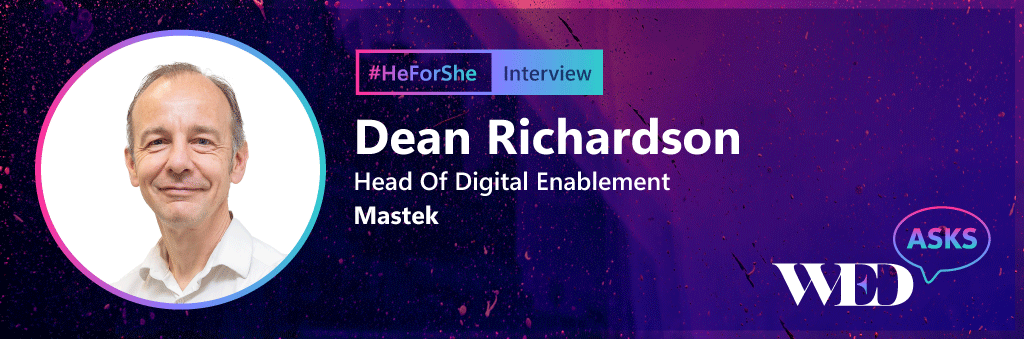
Tell us a bit about yourself, background, and your current role?
I currently lead Mastek’s pre-sales and consulting teams. Prior to this, I held several IT director and CIO roles at a number of companies including Hallmark Cards and Xerox. I started my career as an Analyst / Programmer after completing a computer studies course at Sheffield Hallam University. I’ve always had an interest in IT and computers but my dream job would have been to be a fast jet pilot. My Dad was in the RAF but ironically this put me off just at the time when I would have probably made this move.
Did you ever sit down and plan your career?
No! I’ve always said “If I’m enjoying work, being rewarded and feeling fulfilled then carry on” – I stayed for 11 years at my first company based on this. I’ve moved for family reasons, because I wasn’t enjoying the work or because of not feeling fulfilled but never because of a grand plan.
What one thing do you believe has been a major factor in you achieving success?
I’ve thrived in environments conducive to how I like to work, where my colleagues are pulling together and especially in my earlier career where I’ve had senior sponsorship helping me to navigate corporate life. That’s 3 things but the most major factor has been the sponsorship.
Have you faced any challenges along the way?
Many but they all seem smaller now than they did then.
What does gender equality in the tech sector mean to you, and why do you think it’s important?
I need to try to say this in the right way – I’ve sometimes been blind to inequality in the tech sector and in my roles. My management style is supportive and empowering and has been across my career but I’ve not actively used my leadership position to help in terms of addressing inequality. So gender equality is to me about trying to understand more, appreciate better and be less neutral as leaders all of which are important in themselves.
What inspired you to become an advocate for gender equality in tech?
I’m not just saying this but it’s firstly being involved in WED and hearing the incredible stories as well as the challenges being faced. Secondly I’ve realised that I do have the opportunity to try to make a difference and also try to influence others. I find it frustrating that anyone would have any bias to anyone but doing nothing except being frustrated is not enough.
Have you ever had a moment where you recognized your own biases in the workplace? How did you address it?
I can be too quick sometimes in speaking without consideration of the other persons perspective, background, feelings. I’ve worked on this and now try to think more, pause and reflect. In our recent IWD events at Mastek, It was clear that I’ve got a lot to learn in terms of understanding the cultural and gender differences. Sitting and listening is a simple but very effective way of learning.
The tech industry has long been male-dominated. What do you think are the biggest challenges women face in this field?
The challenges start very early – Male roles and role models are seen as the default very early on in school creating barriers to entry. This is in spite of the leading role that Women played in the development and progression of the technology industry. At the other end of the scale the prominent technology leadership figures today are in more of a position to influence but are promoting a new form of male domination that perpetuates this myth.
What role do male allies play in making tech workplaces more inclusive for women?
I see my role firstly to actively listen and to try to understand. Then proactively help, encourage, persuade, direct where appropriate. Then measure the success of our actions through more listening and feedback from the people concerned. We need to influence more widely and not stand on the sidelines.
What are some common misconceptions men in tech have about gender equality, and how can they be challenged?
IWD is a great initiative, but I sometime get the impression that this is seen as a one day only event. Change happens through actions and not just words – initiatives need to be followed through, measured and checked for success. Secondly, I think there can be a lack of proactive understanding of the issues or a misconception that the issues are not important or relevant in the workplace. Listening to and hearing from those impacted and then taking actual steps to help change this is how to challenge this going forward.
How do you ensure women in your team are given equal opportunities for leadership and high-impact projects?
Firstly, we need to proactively seek candidates to come into our team from diverse backgrounds. This is something we need to work harder on this year. Then, my role is to ensure the right person is allocated to the appropriate projects and position. In parallel I ensure that any barriers faced are identified and moved or diverted around. I recognise this this last part needs to have greater focus.
How can men in leadership positions make sure women’s voices are heard in meetings and decision-making processes?
I think all of us need to be more self-aware and aware of others. Obvious things like time talking, interrupting, not encouraging input are often not so obvious in the middle of a meeting or pressurised environment. I think facilitation skills should be taught and re-learned in the online meeting environment we are in today. Listen, hear and learn from those involved.
What steps do you take to encourage more women to enter and thrive in tech careers?
We are seeking candidates from diverse backgrounds. We are encouraging those already in roles to seek more responsibility and to sponsor them into trying new areas of responsibility in a safe and supported way.
How do you address men who feel that gender diversity initiatives “put them at a disadvantage”?
Listen, hear and then try to understand. Attend events to gain a perspective on this from a broader perspective. Read around the subject. Surround yourself with people with different perspectives rather than ones who only have the same view.
And finally, what advice would you give to other men who want to be better allies but aren’t sure where to start?
Sit down and take the time to listen, hear and understand what someone who is not the same as you is experiencing. Try to see the world through their eyes.


Responses